EPR Packaging 2026: The complete guide for e-commerce sellers
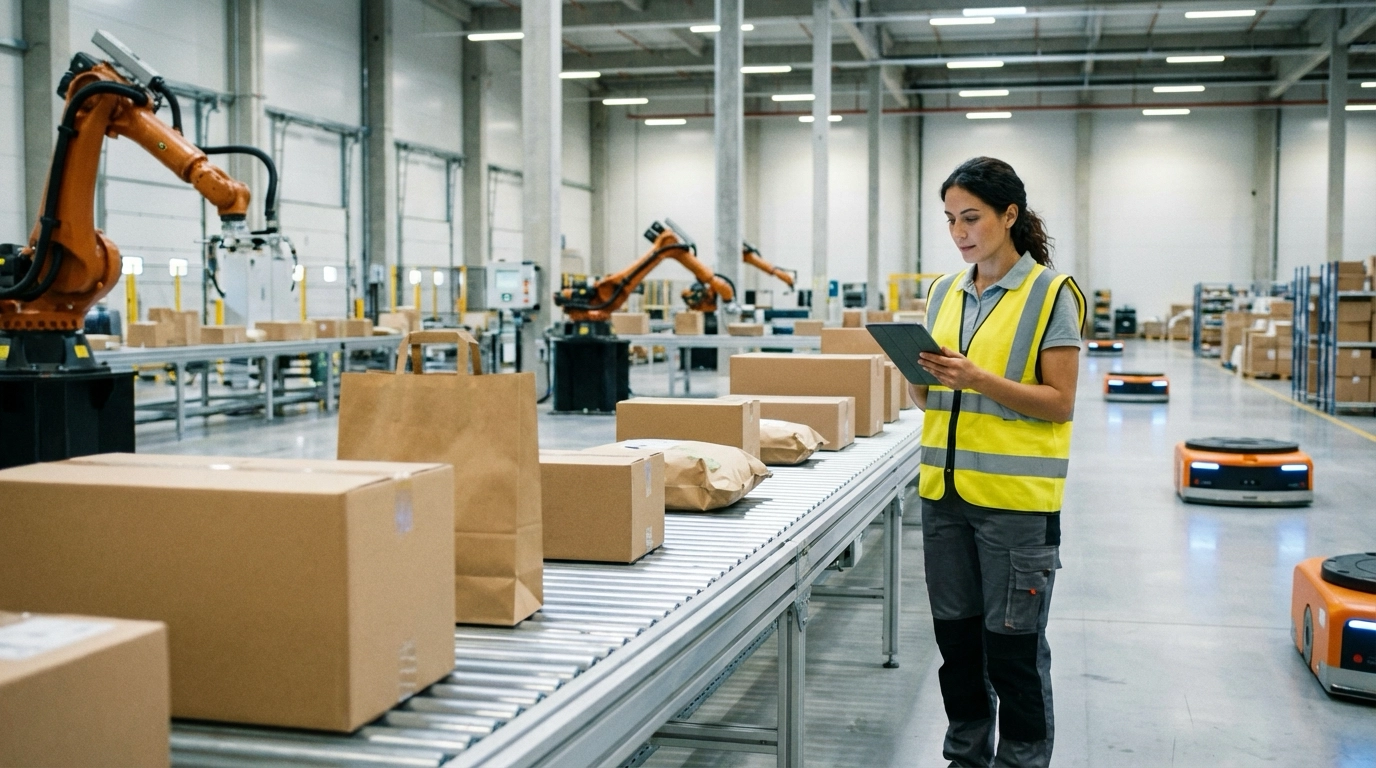
EPR Packaging 2026 profoundly changes how online sellers design and declare their parcels. Between the European PPWR regulation and national laws such as the AGEC law in France, obligations are becoming stricter and more uniform: every parcel is now a regulated, traceable item subject to an eco-contribution.
This guide reviews the key points of EPR Packaging 2026, the risks for your online business and the practical steps to stay compliant. You will find an operational guide written for online sellers, not for lawyers.
EPR Packaging 2026: The complete guide for online sellers.
Reading time: ~14 min
1. Understanding EPR Packaging 2026
2. Who is affected among online sellers
3. The new EPR Packaging obligations for online businesses
4. How to prepare in practice for 2026
5. Limits and points of attention for online sellers
6. Outsourcing your EPR Packaging compliance to an authorised representative
7. Frequently asked questions about EPR Packaging 2026
8. Preparing now for EPR Packaging 2026
Understanding EPR Packaging 2026
Extended producer responsibility (EPR) applied to packaging rests on one principle: if you place packaging on the market, you are responsible for its end of life. You must therefore fund and organise its collection, sorting, recycling or reuse through producer responsibility organisations (PROs).
From 12 August 2026, the European PPWR regulation will apply to all packaging placed on the market in the European Union. It targets e-commerce and logistics in particular, as packaging waste increased by more than 20% between 2011 and 2022. In France, EPR for professional packaging will become mandatory from 1 July 2026 for boxes, films, pallets, big bags and other transport or industrial packaging.
The main objectives are as follows:
• drastically reduce unnecessary packaging and empty space in parcels;
• make all packaging recyclable by 2030 at the latest, with a minimum performance level;
• develop standardised reuse solutions, particularly in logistics and e-commerce;
• harmonise EPR reporting across the European Union with common declaration rules.
EPR Packaging 2026 is therefore not limited to labelling: it redefines how you design your parcels, organise order preparation and manage your product data.
Who is affected among online sellers
In most European countries, you are considered a “producer” as soon as you place packaging on the local market for the first time, even in very small volumes. This includes: a D2C brand shipping from France; a foreign seller on a marketplace delivering to France; an importer bringing in already packaged products; an online seller whose parcels are prepared by a logistics provider or a fulfilment programme.
Using a marketplace does not exempt you from these obligations; on the contrary, platforms now require proof of EPR compliance, otherwise they may suspend your catalogue.
The new Packaging EPR obligations for e-commerce businesses

Minimising and rethinking your packaging
From 2026, design rules will become stricter. You will need to avoid oversized packaging, limit empty space and unnecessary filling, remove excess packaging layers and favour recyclable materials that are compatible with each other. The EU target is for 100% of packaging to be recyclable by 2030. The PPWR also encourages standardised formats that support reuse.
– avoid packaging that is too large;
– limit empty space and unnecessary filling;
– reduce or remove excess packaging layers;
– favour materials that are easy to recycle.
Reporting and EPR declarations
Packaging EPR 2026 relies on detailed and harmonised reporting: materials used, weight by packaging type, country of placing on the market and the period concerned. In France, registration is mandatory from the very first packaging item. Marketplaces can block your listings if you do not have a valid registration number.

Joining producer responsibility organisations (PROs) and paying eco-contributions
You will need to join one or more authorised producer responsibility organisations (PROs) (for example Citeo for household packaging, Ecomaison for professional packaging). Contributions depend on tonnage, material and sometimes the environmental performance of the packaging. Remote sellers often need to appoint an authorised representative for each country.
How to prepare for 2026 in practice
1: Identify your status and your scope
Clarify your role: producer, importer, brand owner or simple reseller. Also map out your sales channels (own website, marketplaces, B2B) to anticipate the compliance evidence required.
2: Map out all your packaging
For each product, list the primary, secondary, shipping and transport packaging. This full picture reveals opportunities to reduce volumes or simplify materials.
3: Structure your data for reporting
You need to know the exact material and weight of each packaging item, ideally linked to your product references. This avoids declaration errors and simplifies export to several countries.
4: Register with the producer responsibility organisations
Plan ahead for processing times: obtain your EPR unique identification numbers (UIN), sign the necessary contracts and update your commercial documents with these numbers.
5: Adapt your logistics and your partners
Your warehouses and fulfilment providers must limit empty space, streamline consumables and test reuse schemes. These parties will become key checkpoints for EPR compliance.
Limits and points of attention for online sellers
Administrative complexity varies by country: frequency, thresholds and declaration forms differ, which increases the risk of internal errors. Eco-contribution fee scales remain unstable: significant increases in eco-contributions can affect your margin; incorrect categorisation can lead to extra costs. Finally, pressure from marketplaces is increasing: a missing identification number or an incomplete declaration is enough to block your listings.
Outsourcing your EPR Packaging compliance to an authorised representative
Many online sellers outsource their compliance to save time and reduce risk. In France, CompliancR acts as an authorised representative: the platform analyses your catalogues, identifies the relevant EPR schemes, calculates eco-contributions and submits your declarations by the correct deadlines. You get a dashboard with history, alerts and tracking, recognised by marketplaces.
Frequently asked questions about EPR Packaging 2026
Are small online sellers really affected?
Yes. Most countries, including France, require registration from the first item of packaging placed on the market. Reporting can be simplified below certain volumes, but the basic obligation remains.
Which types of packaging are covered by EPR Packaging 2026?
This covers sales, shipping, grouping and transport packaging, for households and professionals: boxes, envelopes, plastic films, padding, pallets, wraps, big bags, bottles, flasks, etc.
Do I need an authorised representative if I sell abroad?
As soon as you sell to several EU countries, appointing an authorised representative is often mandatory. An authorised representative centralises your procedures and manages local registrations.
What are the risks of non-compliance?
You risk administrative fines, suspension of your marketplace accounts, blocked deliveries or refusal of certain logistics services.
When should I start preparing?
Ideally right now: upgrading packaging, structuring data and obtaining identification numbers all take time. Preparing early also lets you communicate positively about your circular economy commitments.
Preparing now for EPR Packaging 2026
EPR Packaging 2026 marks a turning point for e-commerce. By structuring your data, rethinking your parcel formats and relying on a specialised authorised representative, you protect your business, reduce your costs in the medium term and strengthen your image as a responsible brand.
To learn more about extended producer responsibility and its impact, explore our “Extended Producer Responsibility” category on the blog, then contact our team to define the best compliance strategy for your online business.