Marketplaces: how to automate EPR compliance for thousands of third-party sellers?
The AGEC law: a regulatory obligation marketplaces can no longer avoid
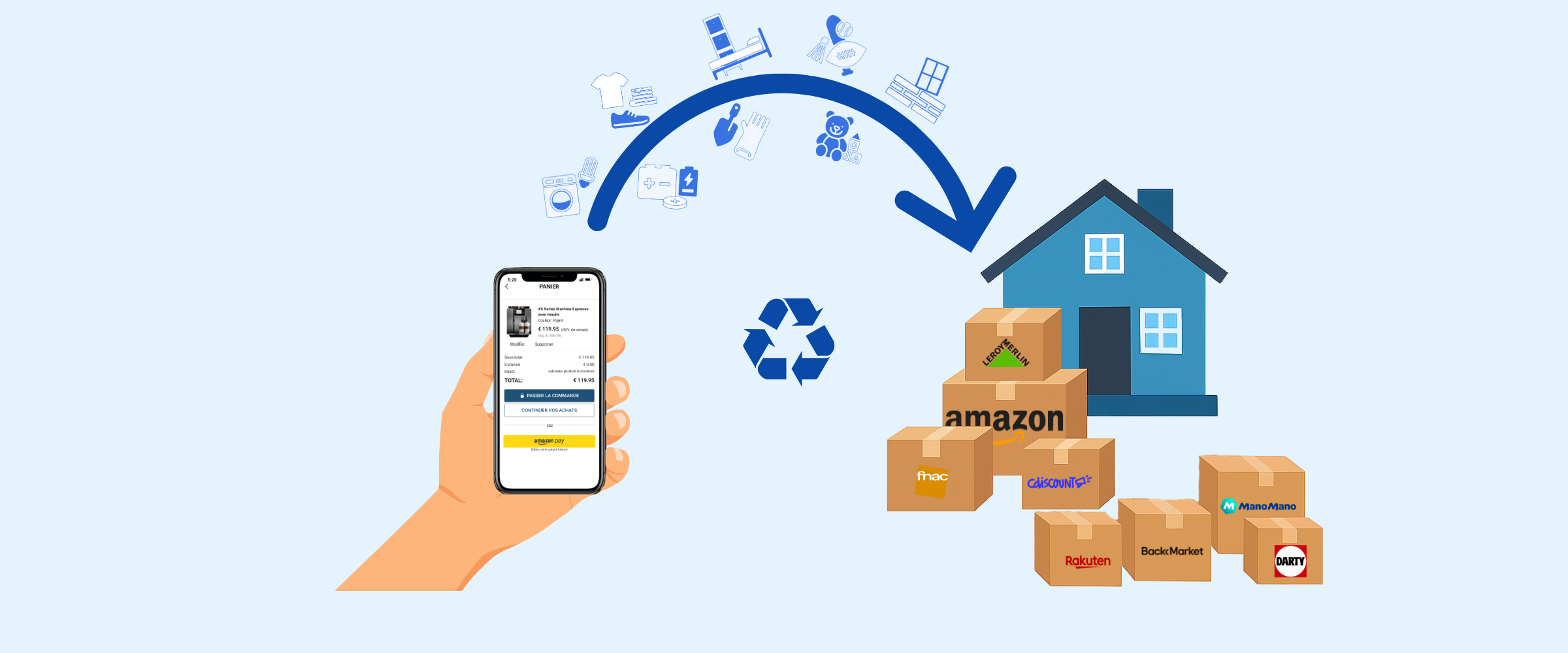
The AGEC law requires all intermediary platforms (Amazon, ManoMano, Cdiscount, etc.) to check that third-party sellers meet their EPR obligations. This includes:
- Registration with an authorised producer responsibility organisation (PRO);
- Obtaining an EPR unique identification number (UIN, issued by ADEME);
- Declaring the quantities placed on the market for each relevant scheme.
- Passing on the eco-contributions for their WEEE and furniture products
This principle of "transfer of environmental responsibility" turns marketplaces into co-pilots of EPR compliance, on the same footing as producers or importers.
The risks for marketplaces in case of non-compliance
Failing to properly monitor sellers' EPR compliance exposes platforms to several risks:
- ADEME sanctions: fines in case of audits or breaches;
- Damage to the platform's image: accusations of greenwashing or laxity.
In addition, marketplaces must produce an annual report to the authorities proving they have checked the validity of their sellers' UINs.
A growing requirement... facing a highly uneven seller base
The challenge is that not all sellers are at the same level:
- Some don't know they are subject to EPR;
- Others use UINs that are invalid or don't match the correct scheme;
- Many don't know how to calculate their eco-contributions.
The result: marketplaces bear a growing verification burden, often manual, poorly structured and time consuming.
CompliancR: the all-in-one solution for marketplace EPR
At CompliancR, we have designed a solution tailored to the specific challenges of marketplaces.
For compliance and partner teams:
- Automatic UIN verification API at seller onboarding;
- A dashboard to track declaration and UIN validity per seller;
- Smooth integration with account management or KYC systems.
For sellers:
- A self-service platform to obtain their UIN, declare their products and generate their supporting documents;
- Simplified support by scheme (packaging, EEE, textiles, furniture...);
- Automated calculation of eco-contributions from their catalogue.
The result: compliant sellers, a respected regulatory framework, and a stronger relationship of trust.
EPR compliance becomes a strategic lever for marketplaces
In 2025, compliance is no longer just a box to tick. It's a seller selection criterion and a sign of reliability for consumers.
Marketplaces that structure their EPR policy now will gain:
- More appeal for responsible sellers;
- More visibility in an increasingly regulated market;
- More efficiency in their reporting obligations.
CompliancR helps you turn an obligation into an operational advantage.
Find out how our solution integrates with your platform to manage marketplace EPR without friction.