EPR schemes: towards a governance overhaul in France?
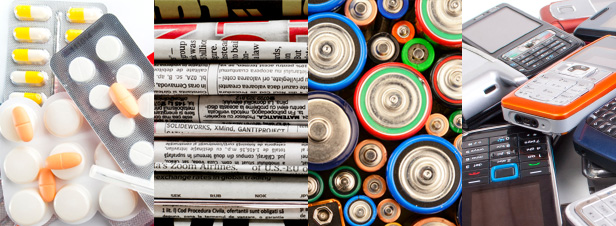
About thirty EPR schemes under pressure
With the growth of extended producer responsibility (EPR) schemes, now more than 30 in France, the EPR system has become a pillar of environmental policy. This expansion has come with growing complexity that worries local authorities, producer responsibility organisations (PROs), and producers.
The Senate report of 13 June 2025, presented by senators Rémy Pointereau and Nicole Bonnefoy, is clear: the current governance has reached its limits. It struggles to guarantee operational efficiency, financial transparency, and fairness between stakeholders.
Three main criticisms of the current system
- An unclear role for the State: ADEME (the French environment agency) too often acts as an executor, without real strategic oversight of producer responsibility organisations (PROs).
- PROs acting as both judge and party: their governance is sometimes too focused on producers' interests, leaving little room for local authorities or citizens.
- A lack of clarity for producers: rules change quickly, fee scales lack predictability, and obligations multiply without sufficient support.
Towards a renewed and more balanced governance
The report proposes several levers to restore coherence to the EPR system:
- Strengthen ADEME's strategic role, to make it a true coordinator of the schemes;
- Create a regulatory body dedicated to EPR, independent from PROs;
- Involve local authorities and civil society more in governance;
- Clarify the role and expected commitments of PROs, particularly regarding environmental performance and local investment.
These proposals aim to build a clearer, fairer, and more transparent EPR model, supporting the circular transition.
What this means for producers
For businesses subject to EPR, these upcoming changes already require:
- Continuous monitoring of upcoming reforms, particularly adjustments to specifications;
- Better control of product data and the quantities placed on the market;
- The ability to justify declarations and adapt quickly to new fee scale, logistics, or reporting requirements.
In short: in a system being reorganised, the most structured businesses will keep control.
CompliancR: managing your EPR declarations in a changing framework
At CompliancR, we already anticipate these changes. Our platform allows producers and distributors to:
- Centralise product data for all EPR schemes (packaging, EEE, textiles, PMCB, etc.);
- Automatically manage declarations, regardless of the PROs involved;
- Track regulatory changes in real time, with contextualised alerts;
- Prove compliance at any time, in case of an audit or dispute.
As the EPR framework moves towards more rigour and transparency, CompliancR gives you the clarity and regulatory agility you need.
Start preparing today for the next generation of EPR schemes.