AGEC Law Explained Simply | 2026 Guide | CompliancR
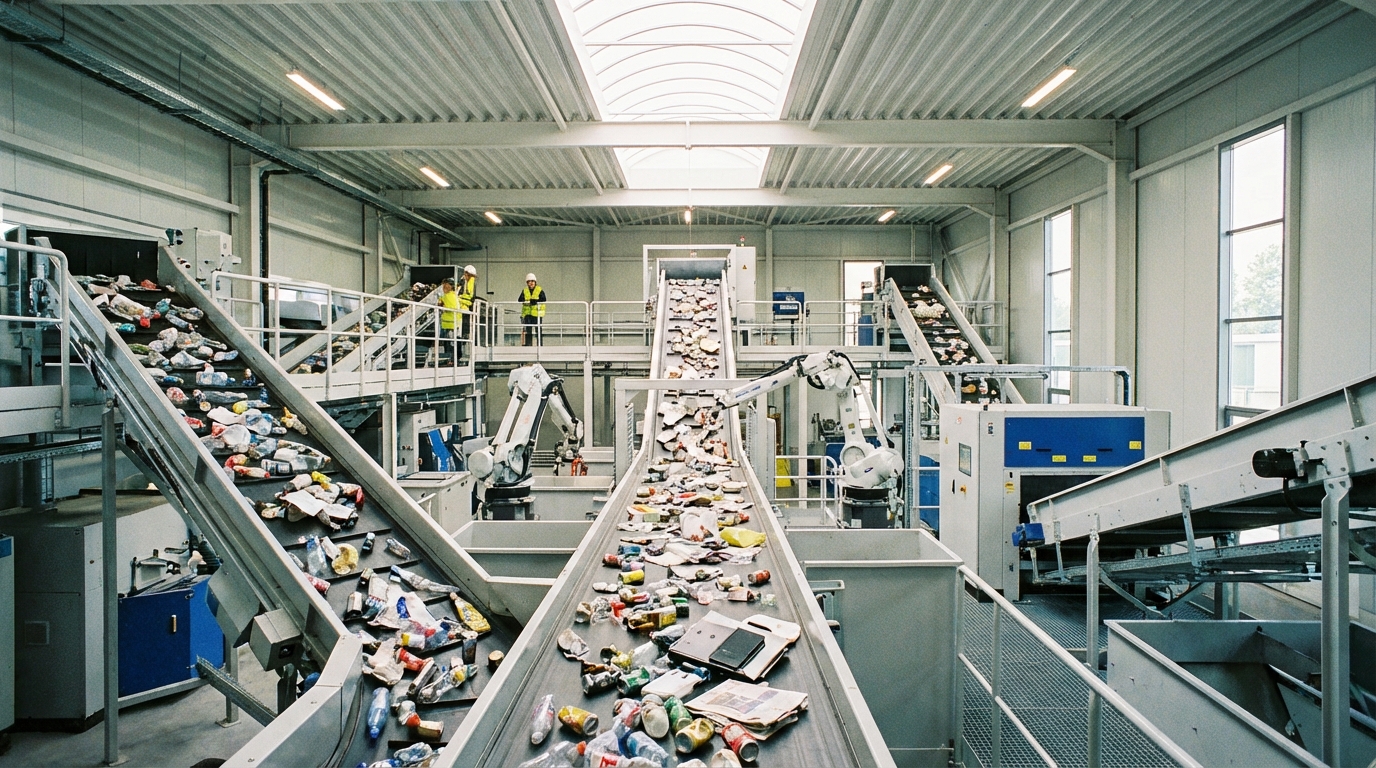
The AGEC law (French anti-waste law of 2020) changes how you design, sell and manage the end of life of products. In 2026, new obligations widen its scope further, making compliance unavoidable for almost every business.
Here is a clear, actionable guide to understand what the AGEC law involves and how to prepare now.
AGEC Law Made Simple: What Your Business Needs to Know in 2026
Reading time: ~12 min
The AGEC law: a simple explanation for businesses
Enacted in 2020, the AGEC law contains nearly 130 articles aimed at reducing waste, limiting waste generation and encouraging recycling and reuse. Rather than treating each topic separately, it covers the entire product lifecycle.
In practice, it creates three main obligations: 1) knowing what happens to your products after sale; 2) informing your customers clearly about environmental impact and repairability; 3) funding and organising collection, sorting and recycling through the appropriate EPR schemes. After an initial phase from 2021 to 2025, requirements intensify in 2026, which is why it matters to plan your investments and avoid penalties.
The 5 key areas of the AGEC law
The law is structured around five areas that directly affect your activities.

1 Moving away from single-use plastic
Target: a 20% reduction in single-use plastic packaging by the end of 2026, with priority given to reuse. Non-recyclable packaging will be phased out progressively. You need to review materials, formats and inks to switch to recyclable or reusable solutions, and prepare for the end of single-use plastic where alternatives exist.
2 Better informing consumers
Repairability indices (and later durability indices) become mandatory for certain equipment, as does the disclosure of hazardous substances or recycled material content. You need to track this information and display it clearly on the product, packaging or online listing.
3 Tackling waste
Destroying unsold non-food goods is banned. Donation, repair, reuse or recycling become mandatory, which requires partnerships with reuse organisations or internal refurbishment processes.
4 Acting against planned obsolescence
The period during which spare parts must be made available is extended, and repairability indices become widespread. Your after-sales service, stock and supplier contracts must align with these requirements.
5 Adopting responsible production
Extended producer responsibility (EPR) is strengthened: eco-design, disassembly, biowaste management and joining the appropriate EPR schemes become standard practice to limit the impact of your products.
The main AGEC obligations for your business in 2026
Several measures come into force or expand this key year.

Expansion of extended producer responsibility
New categories join the EPR scheme: professional packaging, DIY and gardening items, toys, sports equipment, oils, sanitary textiles, fishing gear containing plastic. Producers, importers or businesses placing products on the market must register with the relevant schemes, obtain an ADEME (the French environment agency) identifier and fund the end of life of their products.
Managing professional textile waste
Businesses and local authorities that generate textiles (workwear, linen, furnishings) must sort this waste separately and secure reuse or recycling channels.
Separate collection of biowaste
Restaurants, canteens and industrial sites must set up sorting at source and enter into contracts with providers able to process this biowaste through composting or methanisation.
Eco-modulation of contributions
Financial contributions to recycling schemes vary according to environmental impact: a durable, easily recyclable product costs less than a complex or hard-to-repair one, making eco-design an economic lever.
Responsible public procurement
From 2024, public entities must include at least 20% of products from reuse, refurbishment or recycling, a proportion set to increase until 2030. Suppliers to public procurement therefore have every interest in adapting their offer.
Practical impacts and limits for your organisation
The AGEC law is not just paperwork. It requires you to review your specifications to include eco-design, audit your waste streams and prove your compliance (EPR contracts, sorting reports, traceability). It also creates opportunities: commercial differentiation through durable products, innovation and new partnerships in recycling or repair. The main limits affect small businesses: regulatory complexity, upfront costs and a timeline spread out until 2040.
How to achieve AGEC compliance in 6 steps
To go further, read the detailed steps of EPR compliance.

Mini FAQ: AGEC law 2026
Who is affected? Almost every business: producers, distributors or importers. The 2026 steps mainly target the expanded EPR schemes, generators of biowaste or professional textiles, and public procurement.
What is the risk for a non-compliant business? Financial penalties of up to €75,000 can apply for failing to meet EPR, sorting or spare parts availability obligations.
Does the law only apply in 2026? No: a gradual timeline runs from 2021 to 2040. 2026 marks a major milestone with the arrival of the PPWR in August 2026, but further changes will follow.
How can a small business manage this without a legal department? Three options: guides from producer responsibility organisations (PROs), audits offered by waste management providers and support tools that structure an action plan.
In short, the AGEC law changes how you design your products and manage your waste. A clear understanding and a structured action plan reduce your risks and open the way to new opportunities linked to the circular economy. To learn more, see the resources available on Compliancr.